Missing Stock
Teams struggle to confirm what is out, what is missing, and what should be chased before the next issue cycle begins.
Connect RFID garment tracking with employee allocations and hire orders. Ledger records completed issues and returns so staff can check who has each garment and follow up outstanding items.
Built For
Operational Pain
Busy collection and return periods create a narrow window to issue, recover, inspect, and reallocate stock. When records are split across spreadsheets, ordering systems, and manual checks, teams lose time and confidence at exactly the wrong moment.
Teams struggle to confirm what is out, what is missing, and what should be chased before the next issue cycle begins.
Manual checks add friction during busy return periods and delay the point where staff can confidently mark items back in.
Repair, cleaning, and status information often lives outside the main asset record, which makes decisions harder later.
Ops staff waste time exporting, matching, and checking records across systems just to understand current stock position.
How Ledger Helps
Follow each garment through allocation, return and preparation for its next issue. RFID identifies tagged garments; the active workflow determines how those scans become allocation or return records.
Open the relevant order and check who is receiving the garments. Scan the tagged garments, review the selection and complete the issue action. The allocation record links each garment to its recipient and order, with the issue date.
For collection events such as graduations, order and event information provides context for the handover. Scanning identifies the garments; completing the issue records the allocation.
Use the RFID return workflow to identify tagged garments in a batch. Check the processed returns and resolve garments that were not recognised or need a manual check. A successful return ends the active allocation and creates a dated return record against the garment and order.
Compare the garments issued on the order with its recorded returns. Items still allocated remain available for follow-up with the recipient. An unread tag alone does not prove a garment is missing.
Inspect returned garments and add condition notes or photos to the garment record when repairs need attention. Ledger also records maintenance activity, including its laundry service workflow and manual cleaning records.
Use those records when deciding what is ready for the next issue. Agree how garments awaiting repair or cleaning will be held aside during the workflow review; a return record alone does not confirm readiness or guarantee that reissue is blocked.
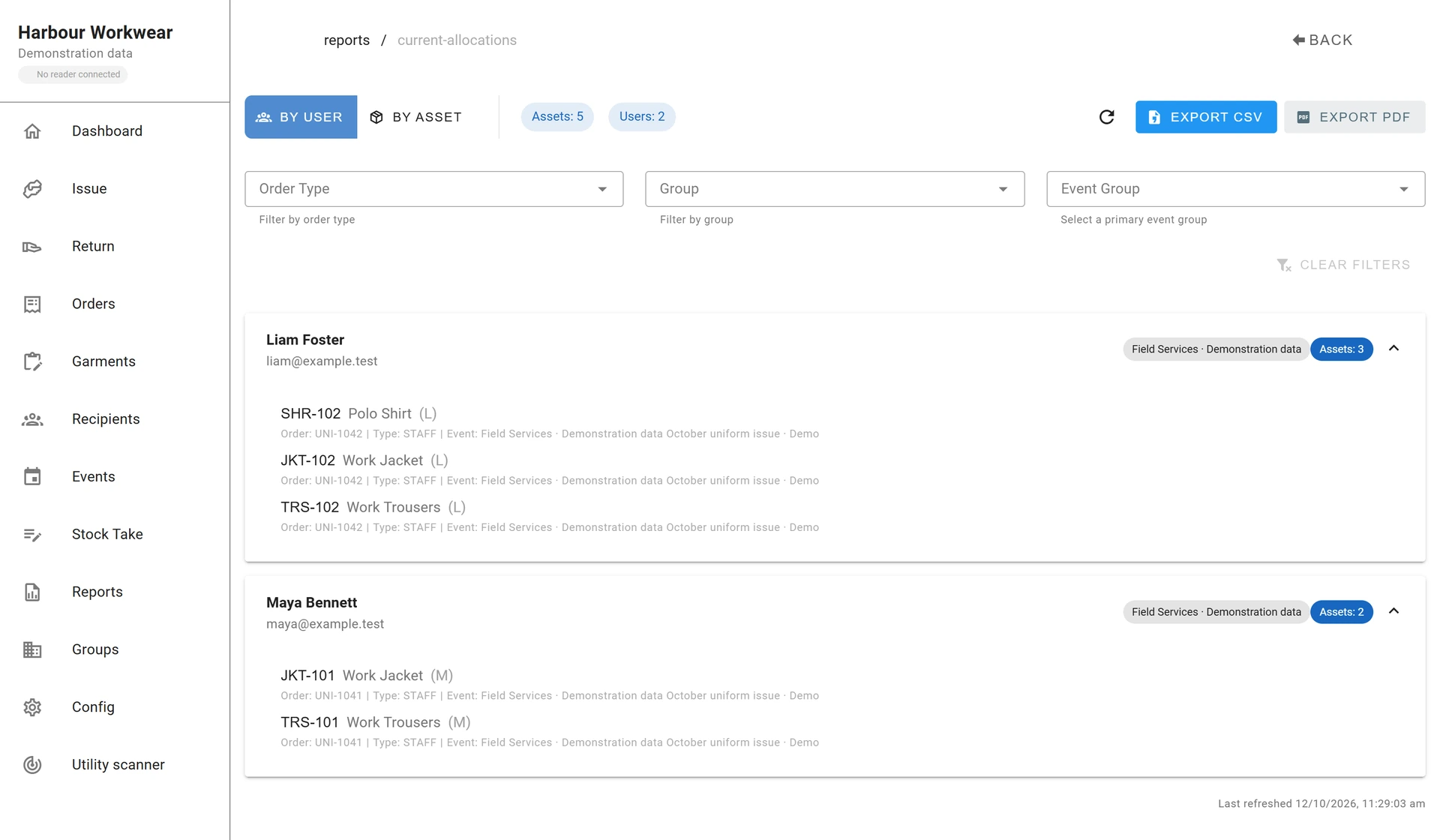
Review a garment’s allocation and return history to see who received it and when it was issued or returned. Current allocation reports show garments still assigned to recipients, with order and event context where available.
Use that outstanding-item view to decide who needs a reminder or which records need checking before the next collection or issue period.

Outcomes
Faster turnaround during collection and return periods.
Fewer lost or unreturned garments left buried in manual follow-up.
Cleaner accountability for who had what and what still needs action.
One place to track issue, return, repair, and status history.
Practical questions
Each garment has an asset record. Completing an issue links it to a recipient and order. You can review current allocations by recipient or garment, then check the allocation and return history for earlier handovers.
Review the garments still allocated to a recipient and compare the order’s issued garments with recorded returns. Your team can use those records to organise follow-up. Check unread tags and incomplete returns before treating an outstanding garment as lost.
A supported reader captures tags from multiple garments and Ledger matches them to asset records in the return workflow. Successfully processed returns end their active allocations and add return history. Operators check the results and handle exceptions. The batch and read zone need testing with your garments, tags and reader setup.
Ledger supports handheld and desktop RFID reader workflows. Choose the supported reader and tag combination for your issue station or return area. For garments, test tag attachment and durability through your actual washing, drying and handling process, as well as reliable reads in the batches staff will process.
Condition notes, photos and maintenance history can inform the next issue decision. In the workflow review, we’ll agree how your team records service work, holds garments aside and checks readiness. Any automatic restriction on reissue needs to be confirmed for your setup.
Compare supported RFID readers or read our RFID vs barcode asset tracking guide to work through scanning and software requirements together.
Client Example
The operational bottleneck was not simple tracking. It was the gap between live orders, fast issue, bulk returns, and confidence that outstanding garments could be identified without heavy manual reconciliation.
Client Type
GWC Regalia Hire manages high-volume graduation regalia issue and return workflows with tight turnaround windows.
Initial Problem
Order data and RFID tracking were split across systems, which forced manual exports and made late-order changes hard to manage.
What Changed
The new system connected live order information with RFID issue and return handling so operators could process garments faster.
Operational Result
The team gained a more streamlined hire and return process with clearer records of who had what and what was still outstanding.
Discuss Your Workflow
Talk through who receives garments, how returns are recorded, and what happens to outstanding or damaged items. We’ll review the records, readers, tags and system connections your workflow needs.